---
path: /blog/customer-testimonial-strategy
title: "How to Get More Value From Every Customer Testimonial"
description: "Stop chasing individual testimonials. Treat customer conversations as source assets that generate testimonials, quotes, and case studies as derivatives."
canonical: https://www.shine.studio/blog/customer-testimonial-strategy
author: "Travis Keeney"
publishedAt: 2026-01-20
topic: "Shine POV"
---
# How to Get More Value From Every Customer Testimonial
Here's a pattern that plays out at most B2B companies:
Marketing needs a testimonial for a landing page. Someone emails a customer. The customer writes something generic. Marketing rewrites it to sound better. The customer approves. It gets published.
Three months later, Sales needs a quote for a proposal. Someone emails the same customer. The customer writes something slightly different. It gets added to a deck.
Six months later, the website team needs social proof for a new product page. They dig through old emails, find a quote that sort of works, and use it without checking if it's still accurate.
This isn't a testimonial strategy. It's testimonial archaeology.
Most teams are chasing individual quotes when they should be capturing complete customer stories. The testimonial isn't the asset. It's a fragment of the real asset.
## The Problem: Treating Testimonials as Primary Assets
Most teams treat testimonials as standalone artifacts. Each one is created from scratch, approved in isolation, and stored somewhere forgettable.
This creates predictable problems:
**Inconsistency**: The same customer says different things in different places, because each quote was captured separately.
**Staleness**: Quotes drift out of date, but nobody knows which ones or how to refresh them.
**Repetition**: Teams ask the same customers for quotes repeatedly, burning goodwill.
**Risk**: Nobody's quite sure what was approved, by whom, or whether it's still valid.

The root cause isn't lazy marketing. It's treating testimonials as the primary asset when they should be derivatives.
## The Fix: Treat the Customer Story as the Source Asset
A case study captures the full story: the before state, the challenge, the decision, the implementation, the results. A testimonial is a fragment of that story — a specific quote, a single metric, one moment of impact.
When you treat the case study as the source asset, testimonials become derivatives:
**One interview** → Full case study → Multiple testimonials, quotes, metrics, clips
Instead of asking customers for quotes repeatedly, you ask once for their full story. Then you extract what you need, with proper context and approval.
Stop relying on "quick testimonials" as your primary strategy. One proper conversation yields years of proof.
## What Changes When You Think This Way
### 1. You Stop Asking for "Testimonials"
Instead of emailing customers to "write a quick testimonial," you invite them to share their story through targeted interview questions. The testimonials emerge naturally — better for customers (less work, more natural) and better for you (richer material, authentic voice).
### 2. Consistency Becomes Automatic
When all quotes trace back to a single source interview, they can't contradict each other. The customer said what they said. You're just using different pieces of it in different places.
### 3. Approval Simplifies
Instead of approving each testimonial separately, customers approve the source material once. Derivatives inherit that approval, with clear attribution back to the original — and if a customer later wants to revoke something, you know exactly which derivatives are affected.
### 4. Refresh Gets Easier
When it's time to update proof, you don't hunt through emails and docs. You go back to the source, capture a new conversation, and regenerate derivatives from fresh material. That source-and-derivative model is the backbone of good customer proof software.
## The Practical Implementation
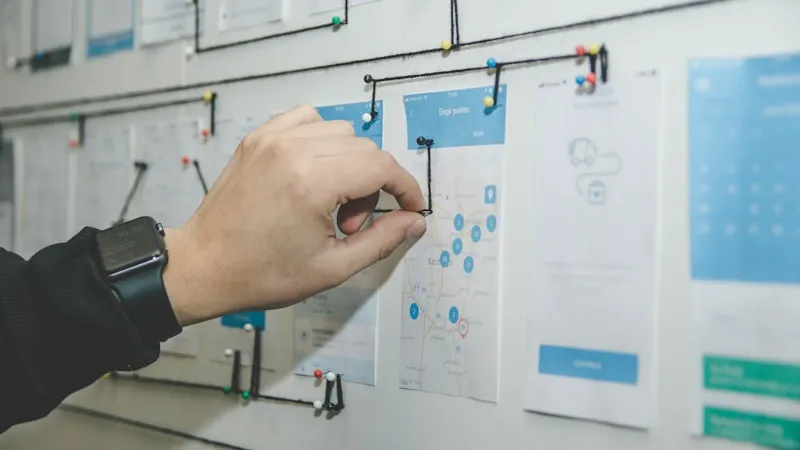
Here's how this works in practice:
**Step 1: Capture the full story**
Conduct a 20-30 minute customer interview. Record it. Cover the full arc: before, during, after. Use questions designed to surface specific outcomes.
**Step 2: Extract approved claims**
From that interview, identify discrete claims: quotes, metrics, outcomes, recommendations. Get explicit approval for each.
**Step 3: Generate derivatives**
Approved claims become building blocks. Assemble them into:
- Full case studies for your website
- One-pagers for sales proposals
- Testimonial cards for landing pages
- Review text for G2 and other platforms
- Social proof snippets for ads
- Sales proof cards for CRM
**Step 4: Track usage**
Know where each claim appears. When source material changes, flag affected derivatives. When a customer revokes consent, update everything at once.
## Why Most Teams Don't Do This
The fragment approach persists because it feels easier in the moment. Asking for a quick quote is faster than conducting a proper interview.
But the hidden costs accumulate:
- Time spent chasing the same customers repeatedly
- Inconsistent proof across touchpoints
- Stale quotes that nobody updates
- Approval confusion that creates legal risk
- Wasted customer goodwill
The source-asset approach requires more upfront investment. One thorough interview instead of five quick asks. But that investment compounds. One interview yields years of derivative value.
Teams using a source-asset approach typically extract significantly more usable proof from each customer relationship, while reducing the total burden on customers.
## Frequently asked questions
**What if I already have testimonials that weren't created this way?**
Start fresh with new customers using the source-asset approach. For existing testimonials, consider reaching back out to those customers for a proper interview. You'll likely get better material and can consolidate scattered quotes into a coherent source.
**How long should the source interview be?**
20-30 minutes is usually enough to capture a full story. Any shorter and you miss context. Any longer and you're asking too much of the customer.
**What if customers only want to give a quick quote?**
Explain that a short conversation is actually easier than writing something. Most customers prefer talking to writing. If they truly can't do an interview, take the fragment, but flag it as a standalone asset without source context.
**How do I handle approval for derivatives?**
Show customers the source claims you extracted and get explicit approval. Make clear that you'll use these in various formats. Most customers appreciate the transparency and prefer one thorough approval to repeated asks.
**Does this work for video testimonials too?**
Especially for video. A recorded interview becomes source material for written case studies, video clips, audio snippets, and quote cards. The video itself is the ultimate source asset.
## The Bottom Line
Testimonials aren't the asset. They're fragments of the asset.
The real asset is the customer's full story, captured properly, approved clearly, and stored in a way that allows unlimited derivative use without repeated asks or approval confusion.
Start treating case studies as source assets and testimonials as derivatives. You'll get more proof, better proof, and less customer fatigue.
Want to see this in action? Story Studio captures customer conversations and automatically extracts approved claims that become testimonials, case studies, reviews, and sales proof. One interview, unlimited derivatives.